Sunday, October 29, 2006

Compassion

How far you go in life depends on your being tender with the young, compassionate with the aged, sympathetic with the striving and tolerant of the weak and strong. Because someday in life you will have been all of these.

George Washington Carver

Or, as the saying goes, there but for the grace of God goes I.

Treat not others in ways that you yourself would find hurtful.

Udana-Varga 5.18

Tuesday, October 24, 2006

Mindfulness and non-attachment


Don’t tire your mind by worrying about what is real
and what isn’t,
About what to accept and what to reject.
If you want to know the One,
let your senses experience what comes your way,
But don’t be swayed and don’t involve yourself in what comes.
The wise man acts without emotion
and seems not to be acting at all.
The ignorant man lets his emotions get involved.
The wise man knows that all things are part of the One.
The ignorant man sees differences everywhere.

Gatha of Seng T'san, Third Chan Patriarch

Monday, October 16, 2006

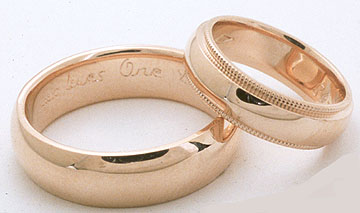
Marriage and non-attachment


Disclaimer: I was married before I began learning about Buddhism, and I am very happy as a married person, so perhaps the following analysis is biased.


Non-attachment is often spoken of as a Buddhist ideal. The Dalai Lama said once that attachment is the "root of suffering." If non-attachment and equanimity are the pavingstones of the road to nirvana, then how can it be beneficial to get married?

I think that non-attachment is too often interpreted to as indifference and detachment. Non-attachment does not mean that one must have no love or connection to any thing or being, but rather that such love or connection should be open, accepting and non-differential. It does not mean that you walk into the ice cream shop and tell the girl behind the counter, "I'll take anything." It means that one must be willing to enjoy a scoop of black cherry on a cake cone if the store is all out of mint chocolate chip and waffle cones.

So, what does that have to do with a marriage? A marriage relationship should be a partnership of equals who respect one another's space, physically and otherwise. It is OK if one partner likes tennis and the other does not, as long as the tennis-loving partner can go play a few sets without the other partner feeling bad. It's no problem if they do not share all of the same friends, so long as each respects the other and the couple can strike a balance in how they spend time with friends and with each other.

My brother boasted to me some time ago that he and his partner had been together every day over the course of their six-year relationship. He told me this with the expectation that I would be impressed by it, but I had the opposite response. I thought it was a little sad and unhealthy. I have asked my brother out to dinner, etc., only to have him decline or (worse yet) cancel at the last minute because his partner didn't want to go. This surprised me. I always thought that there is nothing wrong with a partner going out for an evening with a friend or relative without the other person. It does not make one disloyal and it does not mean the former is abandoning the latter. I believe my brother's relationship with his partner is one laced with possessiveness and unhealthy degrees of attachment.

My husband is going to Boston (we live in Florida) for the weekend to visit his father and a couple of old fraternity brothers. Ordinarily I would go with him, but I have commitments at work that I must keep. While I will miss his company while he is gone, I do not feel jealousy or sadness that he is going. I am glad he can go even though I cannot join him. I believe that this is good, because it indicates that I can love without possessiveness.

Anyway, I have wondered about the idea of marriage and its compatibility with Buddhist principles of non-self, non-attachment and equanimity.

I welcome comments - please!

Sunday, October 15, 2006

Refuge


Taking refuge in the Three Jewels is not something that is done once, but something that all Buddhists should do as a matter of daily living. The Three Jewels--Buddha, Dharma and Sangha--are the cornerstone principles of Buddhist practice and in them, one finds refuge, an escape from the cycle of suffering called samsara.

Lately I have been very busy with my work, and while I never violated any of the precepts, I stopped my daily practice of mindfulness meditation and in general lived less mindfully. Exhausted by the stress of daily life, a couple of weeks ago I looked at myself in the mirror and realized I had moved away from the refuge of the Three Jewels. I had not been studying the Buddha's teachings, and I had ceased developing myself as a dharmasattva, a wise being. I had found myself disconnected from other dharma students who form my loosely-organized sangha.

Realizing the damage I was doing to myself physically, spiritually and mentally by neglecting my practice, I have come back to the refuge of the Three Jewels and assumed again the daily practice of mindfulness meditation.

So what I'm saying is that refuge is not something one does once, when one recites the three-pronged vow, but rather something one does again and again. One can stray and return, as I have.

At the foot of the Bodhi tree, beautifully seated, peaceful and smiling, the living source of understanding and compassion, to the Buddha I go for refuge.

The path of mindful living, leading to healing, joy, and enlightenment,
the way of peace, to the Dhamma I go for refuge.

The loving and supportive community of practice, realizing harmony, awareness, and liberation,
to the Sangha I go for refuge.

I am aware that the Three Gems are within my heart, I vow to realize them.

I vow to practice mindful breathing and smiling, looking deeply into things.

I vow to understand living beings and their suffering, to cultivate compassion and loving kindness,
and to practice joy and equanimity.

I vow to offer joy to one person in the morning and to help relieve the grief of one person in the afternoon. I vow to live simply and sanely, content with just a few possessions, and to keep my body healthy.

I vow to let go of all worry and anxiety in order to be light and free.

I am aware that I owe so much to my parents, teachers, friends and all beings.


I vow to be worthy of their trust, to practice wholeheartedly, so that understanding and compassion will flower, and I can help living beings be free from their suffering.

May the Buddha, the Dhamma, and the Sangha support my efforts.

Thursday, October 12, 2006

Nirvana and Vedic fire physics


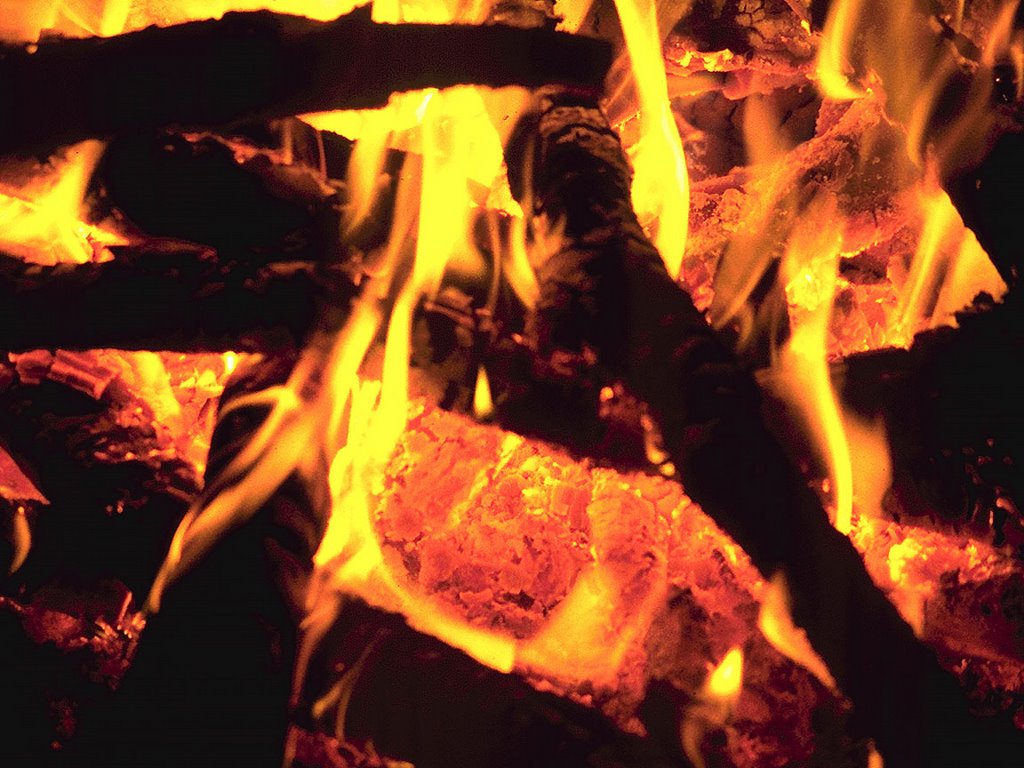
I just read the most amazing book entitled The Mind Like Fire Unbound by Thannisaro Bhikkhu. It's available free online here. It's an essay (about 115 pages in print) that explains what the Buddha meant when he described nirvana as the extinguishing of a fire.

Thannisaro argues that it is misleading to interpret the Buddha's fire analogy using modern ideas about the physics of fire (ignition, fuel, oxygen, etc.). Instead, we need to look at how people in India understood the physics of fire in Buddha's time. The Vedic theory of fire held that the essence of fire never actually dies, but rather is latent and omnipresent everywhere, becoming active and visible to us when it is "agitated" and "attaches" or "binds" to a fuel source (dried grass, oil, wood, fat, etc.). A fire goes out when the essence of fire unbinds or detaches from the fuel source.

Thanissaro points out that the very origin of the term nirvana points to this interpretation. In ancient Sanskrit, the prefix nir meant "not" or "un-" and the word vana meant "bound" or "attached." Consequently, nirvana should be understood as the unbinding of the mind, which causes the fires of passion, delusion and ignorance to flicker and die out.

A more abstract aspect of his argument goes to the idea that the state of nirvana is not unlike that of inactive fire, latent and omnipresent, undescribable and indeterminate. When asked to describe the nature of nirvana after death, the Buddha consistently described it as undescribable.

Anyways, I can't do justice to Thanissaro's argument in a short blog entry, but I highly recommend that you check it out. It's nothing short of brilliant and excellent fodder for contemplative meditation.

Namaste.

May we all be unbound from the fire of samsara.

Wednesday, October 11, 2006

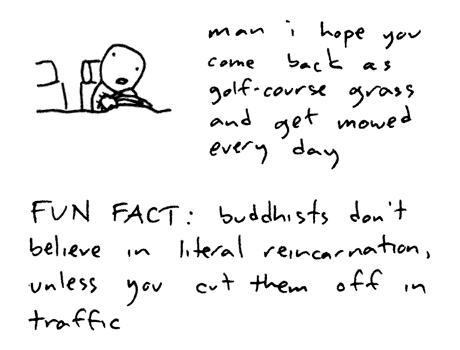
Reincarnation (cartoon)


This is not, strictly speaking, an accurate statement of Buddhist principles, but it sure is funny.

Namaste

"Suffering" and the Four Noble Truths


Most translations of the Four Noble Truths refer to "suffering."

Although I am hardly a scholar of Pali or Sanskrit, it seems to me that, at least insofar as these translations are targeted towards Buddhists in the English-speaking west, it might be better to use a different terminology.

In contemporary English usage, "suffering" has the connotation of physical pain or discomfort. Of course, the Buddha was referring to mental and spiritual suffering or anguish as well as physical pain.

The Sanskrit term dukkha connotes insufficiency, inadequacy, imbalance, uneasiness, impermanence and imperfection:

In classic Sanskrit, the term dukkha was often compared to a large potter's wheel that would screech as it was spun around, and did not turn smoothly. The opposite of dukkha was the term sukkha which brought to mind a potter's wheel that turned smoothly and noiselessly. In other Buddhist-influenced cultures, similar imagery was used to describe dukkha. An example from China is the cart with one wheel that is slightly broken, so that the rider is jolted now and again as the wheel rolls over the broken spot.

[from Wikipedia]


If one must translate dukkha into a single English word, perhaps it is better to think of "dissatisfaction" or "discontentment" rather than "suffering."

If I was trying to explain the Four Noble Truths to a non-Buddhist, I would explain it like this:


  1. Life is inherently unsatisfying. Nothing lasts forever. All things must come to an end. Even those things we believe are lasting are in fact fleeting. Everything around us (and within us) has a beginning and an end.

  2. There is a reason life is unsatisfying. Our dissatisfaction arises from our mistaken belief in the continuity of things around us.

  3. There is a way to overcome such dissatisfaction. If we can learn to live in a way that is mindful and accepting of the impermanence of things, then we will no longer feel so unhappy and unsatisfied.

  4. One can overcome dissatisfaction and achieve nirvana by living in accordance with the Eightfold Path. The Eightfold Path is a set of practices that enable us to live more mindfully so that we feel at peace with the impermanent nature of the universe.

I think too many non-Buddhists hear the word "suffering" and immediately think that Buddhism is pessimistic and bleak. Perhaps by using a different, less negatively connotative terminology we can give English-speaking Westerners a clearer picture of the Four Noble Truths.


Or perhaps it is better not to translate dukkha into a single word and instead to try and define it contextually.


Namaste.

I'm back!

I let myself get a little too carried away by my work obligations and I have neglected myself spiritually.

I am back on the wagon (which looks a lot like a dharma wheel) and back into blogland.

Namaste.

Saturday, July 15, 2006

A voice of reason

Time out in the fighting

From Ha'aretz

Defense Minister Amir Peretz said yesterday that Israel will not allow Hezbollah to man positions close to Israel's border. This criterion is justified and logical, and it should be set as a goal for the current operation in Lebanon.

Israel cannot and should not come to terms with a blatant violation of its sovereignty, along either the Lebanese or the Gaza borders. The launching of Qassam and Katyusha rockets at Israeli citizens in Sderot and the Galilee is unacceptable; the sole question is, what is the best way of stopping them.

After the government has authorized the Israel Defense Forces to use massive force and marked dozens of targets for attack in Lebanon - the Beirut airport being only the first, according to Interior Minister Roni Bar-On; after Lebanon has been placed under siege from land, sea and air, and after dozens of civilians have been killed, it would not be a sign of weakness for Israel to declare a time-out in its military assault in order to allow the Lebanese to reach their own conclusions.

If the aim is really to drive the Hezbollah forces from the border, it is possible that an agreement on this issue can already be reached by the relevant parties. A time-out in the military operation, accompanied by the threat of continued action, could produce immediate results, before civilians on both sides of the border pay the price of escalation.

The operation in Lebanon must have a limited goal, and it should not aspire to alter the reality there and deter the enemy "once and for all," as Bar-On said - whether that enemy is Hezbollah, Iran, Syria or Hamas. It is easy to draw up exaggerated aims and spew statements filled with arrogance and valor, but once things have been said, it is very difficult to take a step back to more moderate and reasonable positions.

The army failed both at Kerem Shalom and on the northern border. Hamas' ability to dig a long tunnel and surprise an IDF outpost on alert, and Hezbollah's ability to surprise a patrol along the northern border two weeks later, should not spur a disproportionate operation that is meant to restore the army's prestige. The IDF must first learn its lessons at the unit and command levels, chastise itself for being overly complacent, and ensure that such failures, which have the potential to fundamentally alter the situation through possible escalation, do not recur.

Professor Eyal Zisser, an expert on the Middle East at Tel Aviv University, said yesterday that Hezbollah Secretary General Hassan Nasrallah is a reasonable man who can make a deal and stick to it, and that it is possible even at this early stage to ask that his forces withdraw from the northern border in exchange for a cessation of the military operation. Those in charge of assessments for the IDF, who misled the government into thinking that Hezbollah would not act against Israel after a soldier was abducted to the Gaza Strip, may think otherwise - but there is no guarantee that they are right.

Israel has a very powerful military, and everyone in the region understands this. But even when there are grounds for employing force, the military's full power should not be used, no matter how justified the action may be. If it is possible to achieve our security goals through diplomacy, a temporary cease-fire should be declared - and hopefully, these aims can be achieved without inflaming the entire region.


Israel, Lebanon and the cycle of violence


I and the people know
What all schoolchildren learn,
Those to whom evil is done,
Do evil in return.

W.H. Auden


Today my heart is sick and sad. How many more will die before the right of all people to live quietly in peace is respected?

In November 29, 1947, the United Nations voted to partition the British Mandate in Palestine into an independent Jewish state and an independent Arab state:

"The vote on partition was taken at 5:35 P. M. Representatives of Iraq, Saudi Arabia, Syria, and Yemen, four of the six Arab member states, announced that they would not be bound by the Assembly’s decision and walked determinedly out of the Assembly Hall at Flushing Meadow. The Egyptian and Lebanese delegates were silent but walked out, too."

(From the New York Times, November 30, 1947 - article available here)

The Arab war on the putative Jewish state began immediately. Two days after partition, Arabs rioted in Jerusalem, killing two shopkeepers and attacking a synagogue and an ambulance en route to a hospital. Over the next two months, the violence escalated into a full-blown siege of Jerusalem: telephone lines between Jerusalem and the rest of Palestine were severed and because the roads into the city were unpassable, food, water and other vital supplies became scarce. (The siege was not broken until June 1948.)

So began a cycle of violence that has continued unabated since 1947, killing untold thousands of people, resulting in the destruction of countless homes and businesses, and leaving an entire people refugees in their own land.

Today I pray that someone has the wisdom and the strength to do what others could not do, and stop the cycle of war and suffering the has plagued the "Holy Land" for so long.

Namaste.


Wednesday, June 21, 2006

Carrie's Colorado-style Buffalo Chili

Okay, so I've not posted in a while. It's been really crazy the last few weeks, with visiting relatives and a crushing workload at the office, so I've been remiss, I know. I can't come up with any brilliant meditative thoughts tonight, but I did come up with a great recipe for chili.


  • 3 cans of beans (kidney, pinto, red or black), drained and rinsed in a collander
  • 24 oz of crushed strained tomatoes (Pomi makes a great product)
  • 1-2 cans of Rotel diced tomato with chiles, drained
  • 1 lb of ground grass-fed/hormone-free buffalo (or lean ground beef), browned
  • 3 cloves of garlic, minced
  • Fresh cilantro (to taste)
  • 1 packet of Goya Sazón with Coriander and Annatto
  • 1 tsp chili powder

Mix all ingredients in a pot and simmer on medium-low heat for 30-40 minutes. Do not allow the chili to boil. The slow simmer will allow the chili to develop its own rich gravy.

Health notes: Rinsing the beans and draining the Rotel eliminates most of the salt from these canned products. I highly recommend using buffalo: buffalo meat has more flavor and less fat than beef, and grass-fed buffalo is higher in Omega-3 fatty acids and iron than beef (and without the risk of BSE that exists with industrially-raised beef).

Namaste, and bon appetit!

Friday, June 02, 2006

Impermanence on a global scale


From space.com:

The Five Worst Extinctions in Earth's History

Here are details of the five worst mass extinctions in Earth's history and their possible causes, according to paleobiologist Doug Erwin of the Smithsonian Institutions National Museum of Natural History. Erwin said estimates of extinction rates are from the late John J. Sepkoski at the University of Chicago:

Cretaceous-Tertiary extinction, about 65 million years ago, probably caused or aggravated by impact of several-mile-wide asteroid that created the Chicxulub crater now hidden on the Yucatan Peninsula and beneath the Gulf of Mexico. Some argue for other causes, including gradual climate change or flood-like volcanic eruptions of basalt lava from Indias Deccan Traps. The extinction killed 16 percent of marine families, 47 percent of marine genera (the classification above species) and 18 percent of land vertebrate families, including the dinosaurs.

End Triassic extinction, roughly 199 million to 214 million years ago, most likely caused by massive floods of lava erupting from the central Atlantic magmatic province -- an event that triggered the opening of the Atlantic Ocean. The volcanism may have led to deadly global warming. Rocks from the eruptions now are found in the eastern United States, eastern Brazil, North Africa and Spain. The death toll: 22 percent of marine families, 52 percent of marine genera. Vertebrate deaths are unclear.

Permian-Triassic extinction, about 251 million years ago. Many scientists suspect a comet or asteroid impact, although direct evidence has not been found. Others believe the cause was flood volcanism from the Siberian Traps and related loss of oxygen in the seas. Still others believe the impact triggered the volcanism and also may have done so during the Cretaceous-Tertiary extinction. The Permian-Triassic catastrophe was Earths worst mass extinction, killing 95 percent of all species, 53 percent of marine families, 84 percent of marine genera and an estimated 70 percent of land species such as plants, insects and vertebrate animals.

Late Devonian extinction, about 364 million years ago, cause unknown. It killed 22 percent of marine families and 57 percent of marine genera. Erwin said little is known about land organisms at the time.

Ordovician-Silurian extinction, about 439 million years ago, caused by a drop in sea levels as glaciers formed, then by rising sea levels as glaciers melted. The toll: 25 percent of marine families and 60 percent of marine genera.

Thursday, May 25, 2006

HIV+

I found out last night that someone close to me is HIV+.

This person ("Peter") and his partner ("Sam") have been together for about 4 years, so presumably Peter acquired the virus before he met Sam. Peter is in his mid-40's, so he was a young gay man during the early days when HIV/AIDS was killing so many and the medical community was helpless to stop it. Sam, on the other hand, is not quite 30, so he grew up in the 1980s and became sexually active in the early 1990s, by which time everyone knew that HIV was transmitted through sexual activity and that the use of condoms could greatly reduce the risk of getting HIV. Sam told me last night that even though he and Peter had only had "safe" sex perhaps 5 or 6 times over the course of their 4+ year relationship, he is not HIV+, at least for the moment.

Horrible as it may be, my first reaction was, "How stupid could you be?" As a young gay man in the early 1980s, Peter had a front-row seat to the carnage of HIV/AIDS and knows first-hand what the disease can do. Sam, on the other hand, learned about "safe sex" as part of the birds and bees, and can't say he didn't know that the risk existed and how to reduce it.

When I asked if he and Peter were going to take proper precautions at this point, Sam said, "Well, it depends on what we're doing." Again, I was incredulous. I can't imagine doing anything to hurt my husband. If I knew that I could potentially expose him to an ultimately lethal virus, I would do everything in my power to keep that from happening. I do not understand why Peter would not insist as a matter of course that he and Sam use condoms so that Sam does not get HIV. And why is Sam so lacking in the instinct of self-preservation (never mind common sense) to insist on this for himself? I don't understand!

When my husband and I were dating, before we had sex, we talked about our respective sexual histories. In our case, each of us had been in only one other significant relationship and had only slept with one other person. Furthermore, as frequent blood donors, we had been tested for HIV and had always tested negative.

Are we unusual in this regard? Don't other people do this before they hop in the sack without a condom? I guess I am just naive, but I would have assumed that Peter and Sam (1) would have had some discussion of their past sexual histories and (2) used a condom until they had (3) both tested HIV-negative.

I know that what is done is done. The past cannot be unwound and rewoven into a new present. And the future cannot be known, so all we can do is mindfully and with lovingkindness live in the present moment, which is really the only moment we have. But that said, I do not believe that one should blindly and recklessly live in the present moment without regard for the consequences of one's actions. And in a way, that looks like what has happened, and is happening, for Peter and Sam.

I feel as if my reaction is compassionless, and I feel bad about it. But right now I feel less sadness and more of a swirl of incredulity and anger. I want the best for Peter and Sam. I love them both. I do not want them to suffer. But I cannot help but look at this situation and think that these two men have not done what they reasonably could to avoid the pain of this situation.

Any thoughts?

. . .

In my own experience, the period of greatest gain in knowledge and experience is the most difficult period in one's life. ...Through a difficult period, you can learn, you can develop inner strength, determination, and courage to face the problem.

-His Holiness the Dalai Lama

Saturday, May 13, 2006

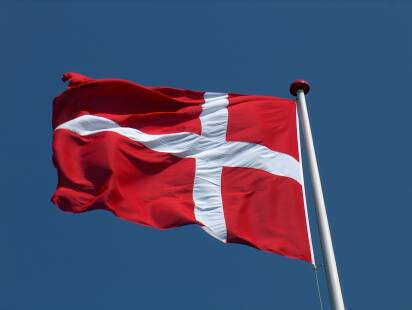
Hejse til Danmark


I'm off to Denmark, everybody!

I'll be keeping a (handwritten) diary and I'll share my experiences when I return.

Farvel...

Friday, May 12, 2006

Buddha's Birthday

Today is Vesak Day – the day popularly celebrated all over Asia as the Buddha’s birthday.

Today, Buddhists all over the world commemorate three great events: The birth, enlightenment and the passing away of Gautama Buddha. As Buddhism spread from India to all parts of the world, the teachings were readily assimilated with the cultures of the people who accepted the teachings. As a result, Buddhist art and culture took on a rich variety of forms with profound gentleness and kindness as the Buddha expressly forbade the use of force. The practice of Buddhism was adapted in many ways to suit the nature of the various cultures that accepted it. As a result of this, Vesak is celebrated in many different ways all over the world. But in essence many practices have become universal. This sacred day is purely a religious festival, and not a festive occasion. On this day all Buddhists are expected to reaffirm their faith in the Buddha Dhamma and to lead a noble religious life. It is a day for meditation and for radiating Loving-Kindness.

Today, devout Buddhists are expected to assemble in various temples before dawn for the ceremonial hoisting of the Buddhist flag and the singing of hymns in praise of the holy triple gem: The Buddha, The Dharma (his teachings), and The Sangha (his disciples). Devotees may bring simple offerings of flowers, candles and joss-sticks to lay at the feet of their teacher. These symbolic offerings are to remind followers that just as the beautiful flowers would wither away after a short while and the candles and joss-sticks would soon burn out, so too is life subject to decay and destruction. Devotees are enjoined to make a special effort to refrain from killing of any kind. They are encouraged to partake of vegetarian food for the day. In some countries, notably Sri Lanka, two days are set aside for the celebration of Vesak and all liquor shops and slaughter houses are closed by government decree during the two days. Birds and animals are also released by the thousands in a symbolic act to liberation, of giving freedom to those who are in captivity. However, it is not recommended that birds be released in the heart of crowded cities, because by doing so we may cause harm to the poor bewildered birds which are unable to fly far after a long period of captivity. Unscrupulous bird dealers would recapture such birds for resale to well meaning devotees. If birds are to be released it is recommended that this be done in rural areas where the birds can achieve real freedom. Some devout Buddhists will wear a simple white dress and spend the whole day in temples with renewed determination to observe the observance of the Eight Precepts.

On this day monks will recite verses uttered by the Buddha twenty-five centuries ago, to invoke peace and happiness for the Government and the people. Buddhists are reminded to live in harmony with people of other faiths and to respect the beliefs of other people as the Buddha had taught.

Celebrating Vesak also means making special efforts to bring happiness to the unfortunate like the aged, the handicapped and the sick. To this end, Buddhists will distribute gifts in cash and kind to various charitable homes throughout the country. Vesak is also a time for great joy and happiness. But this joy is expressed not by pandering to one’s appetites but by concentrating on useful activities such as decorating and illuminating temples, painting and creating exquisite scenes from the life of the Buddha for public dissemination. Devout Buddhists also vie with one another to provide refreshments and vegetarian food to devotees who visit the temple to pay homage to the Blessed One.

The Buddha himself has given invaluable advice on how to pay homage to him. Just before he died, he saw his faithful attendant Ananda, weeping. The Buddha advised him not to weep, but to understand the universal law that all compounded things (including even his own body) must disintegrate. He advised everyone not to cry over the disintegration of the physical body but to regard his teachings (The Dhamma) as their teacher from then on, because only the Dhamma truth is eternal and not subject to the law of change. He also stressed that the way to pay homage to him was not merely by offering flowers, incense, and lights, but by truly and sincerely striving to follow his teachings. This is how devotees are expected to celebrated Vesak: to use the opportunity to reiterate their determination to lead noble lives, to develop their minds, to practise loving-kindness and to bring peace and harmony to humanity.

From Wikipedia.

Thursday, May 11, 2006

Destination: Denmark


Sunday I leave for an 8-day trip to the western (Jylland) region of Denmark.

I probably won't be blogging very much while I'm gone, but I hope to have some interesting things to say when I get back.

Namaste, everyone.

Monday, May 08, 2006

Sunscreen


The local college kids from the University of Central Florida graduated last week. I saw a group of them at a restaurant and it made me think of that song, "Everybody's Free," by Baz Luhrman, that came out a few years ago:

If I could offer you only one tip for the future, sunscreen would be IT.

The long term benefits of sunscreen have been proved by scientists whereas the rest of my advice has no basis more reliable than my own meandering experience.

I will dispense this advice now.

Enjoy the power and beauty of your youth. Never mind. You will not understand the power and beauty of your youth until they have faded. But trust me, in 20 years you’ll look back at photos of yourself and recall in a way you can’t grasp now how much possibility lay before you and how fabulous you really looked.

You are NOT as fat as you imagine.

Don’t worry about the future; or worry, but know that worrying is as effective as trying to solve an algebra equation by chewing bubblegum. The real troubles in your life are apt to be things that never crossed your worried mind; the kind that blindside you at 4pm on some idle Tuesday.

Do one thing every day that scares you.

Sing.

Don’t be reckless with other people’s hearts, don’t put up with people who are reckless with yours.

Floss.

Don’t waste your time on jealousy; sometimes you’re ahead, sometimes you’re behind. The race is long, and in the end, it’s only with yourself.

Remember compliments you receive, forget the insults; if you succeed in doing this, tell me how.
Keep your old love letters, throw away your old bank statements.

Stretch.

Don’t feel guilty if you don’t know what you want to do with your life. The most interesting people I know didn’t know at 22 what they wanted to do with their lives, some of the most interesting 40 year olds I know still don’t.

Get plenty of calcium.

Be kind to your knees, you’ll miss them when they’re gone.

Maybe you’ll marry, maybe you won’t, maybe you’ll have children, maybe you won’t, maybe you’ll divorce at 40, maybe you’ll dance the funky chicken on your 75th wedding anniversary.

Whatever you do, don’t congratulate yourself too much or berate yourself, either. Your choices are half chance, so are everybody else’s. Enjoy your body, use it every way you can. Don’t be afraid of it, or what other people think of it, it’s the greatest instrument you’ll ever own.

Dance. Even if you have nowhere to do it but in your own living room.

Read the directions, even if you don’t follow them.

Do NOT read beauty magazines, they will only make you feel ugly.

Get to know your parents, you never know when they’ll be gone for good.

Be nice to your siblings; they are your best link to your past and the people most likely to stick with you in the future.

Understand that friends come and go, but for the precious few you should hold on. Work hard to bridge the gaps in geography in lifestyle because the older you get, the more you need the people you knew when you were young.

Live in New York City once, but leave before it makes you hard; live in Northern California once, but leave before it makes you soft.

Travel.

Accept certain inalienable truths, prices will rise, politicians will philander, you too will get old, and when you do you’ll fantasize that when you were young prices were reasonable, politicians were noble and children respected their elders.

Respect your elders.

Don’t expect anyone else to support you. Maybe you have a trust fund, maybe you'll have a wealthy spouse; but you never know when either one might run out.

Don’t mess too much with your hair, or by the time you're 40, it will look 85.

Be careful whose advice you buy, but, be patient with those who supply it. Advice is a form of nostalgia, dispensing it is a way of fishing the past from the disposal, wiping it off, painting over the ugly parts and recycling it for more than it’s worth.

But trust me on the sunscreen.

Thursday, May 04, 2006

Moussaoui: response to Tom

Thanks for your comments, Tom.

Regarding (1), the problem was that to prove conspiracy, you have to show an overt act in furtherance of the conspiracy. If I know that my neighbor is going to commit murder, legally speaking, that knowledge alone does not make me a co-conspirator. Now I agree, morally, I would have an obligation to step forward. However, our legal system protects due process of law by requiring more than immoral thoughts. Immoral actions (or, sometimes, inactions) make one legally culpable.

2) I agree that it was a jury that acted yesterday, but I believe that what the jury did is not an isolated incident. I do not think that one can impute the immorality of our government's actions upon the people as a whole. I believe the American people are starting to wake up to the immorality and injustice being carried out in their names. And I think the jury's actions might be an indicator of that.

3) I wear my seatbelt, too. But I think the "freedom" to go without a seatbelt is quite a bit different than the freedoms of speech, association, assembly, religion, etc. that are protected by the First Amendment. If given the choice between warrantless searches and preemptive, blanket wiretaps on the one hand and a graver risk of terrorist attack, I'd take the risk. But as the USA Patriot Act shows, we've invested a lot of energy in constructing a freedom-gobbling police state infrastructure to protect us from the risk of terrorism. The thing is, 45,000 Americans die in car accidents every year, well over half of whom are alcohol-related. But I don't see the kind of hell-bent enthusiasm about car safety and drunk driving that we see invested in the "War on Terror."

Thanks again for your comments, Tom.

Namaste.

Wednesday, May 03, 2006

America, you won


Updated: 7:25 p.m. ET May 3, 2006

ALEXANDRIA, Va. - Al-Qaida conspirator Zacarias Moussaoui escaped the death penalty Wednesday as a jury decided he deserved life in prison instead for his role in the bloodiest terrorist attack in U.S. history. “America, you lost,” Moussaoui taunted.

After seven days of deliberation, the nine men and three women rebuffed the government’s appeal for death for the only person charged in this country in the four suicide jetliner hijackings that killed nearly 3,000 people on Sept. 11, 2001.

Three jurors said Moussaoui had only limited knowledge of the Sept. 11 plot, and three described his role in the attacks as minor, if he had any role at all.


Comment:

Moussaoui was wrong. Today, as a result of the jury's decision to sentence him to life in prison, America won. The sentence is a triumph of compassion, integrity and restraint over anger, hatred and revenge.

I will not launch into a lengthy dissertation about the death penalty, which I felt ambivalent about for many years and now oppose.

But I will say that this was the right decision for three reasons:

1) It shows that we are a nation of reasoned justice, not mob justice. Executing Moussaoui for failing to step forward with knowledge of the 9/11 plan would have been a revenge killing, intended not to punish him for what he did but to avenge the deaths of nearly 3,000 innocent lives taken in the 9/11 terrorist attacks.

2) It prevents us from sliding farther down the slippery slope of giving up civil liberties in exchange for perceived security. Speaking for the moment as a lawyer (I can't help it), it is worth noting that, had Moussaoui been given the death penalty, it would be the first time in the history of American jurisprudence that someone was executed for an act of omission. Remember, Moussaoui was charged with six counts of conspiracy, and the basis of the government's recommendation of the death penalty was that had Moussaoui (who was incarcerated on September 11, 2001) stepped forward and told authorities about the plot, the attacks would not have occurred. He would not have been executed for what he did, but what he didn't do.

3) It shows the world that we cannot be shaken from our core principles, even in the face of danger. In Israel, the day after a suicide bombing, the markets are full of shoppers, the buses are full of riders, and the sidewalk cafes are full of diners. Israelis refuse to allow the risk of terrorism--which happens there every couple of months--to change their way of life. So, too, by adhering to the principles of due process and trial by jury, we have shown the other peoples of the world that we will not be driven to barbarity by the threat of barbarity. Our commitment to our principles should be unwavering.

I hope that the Moussaoui sentence is a bellweather, a sign that we Americans are finally waking up and realizing that, if given the choice, it is better to be more free and less safe than less free and more safe.

May freedom ring!

Namaste.

Sunday, April 30, 2006

Do no harm

"Do not take lightly small misdeeds,
Believing they can do no harm:
Even a tiny spark of fire
Can set alight a mountain of hay."

- Patrul Rinpoche