I found this on the Shambala site and wanted to share it with you:
You think of the difficult person or people and you wish for them to be free of suffering and the root of suffering. Now, a very interesting thing often happens here. You can really get into wishing them to be free of suffering, because you think if they could be free . . . basically you want them to be the way you want them to be, you know. Could they be free of their lousy personality so that I could feel better? This you might call not quite compassion. It's more like justifying your dislike of them by using a compassion practice.
And the other thing is, of course, being glad that they're suffering. Hard to face, but true. When we really dislike people, maybe we're well aware or maybe we'll get more in touch with it by doing this practice but there's a lot of rejoicing, almost, about their misfortune. Because basically they hurt you and you want them to suffer too. So you're glad when you hear that things aren't going well for them. And you feel pretty unhappy when you hear that everything is fine for them. Those kinds of feelings come up about people that we find difficult. So, rather than feeling bad about that just notice that that's what happening. Have a sense of humor. Whatever it is, let the words go and notice the effect.
Sometimes with difficult people, I find it is also quite helpful to actually imagine different scenarios for them. I have actually cooked up some real genuine compassion for some of the very difficult people in my life by beginning to think of, for instance, something happening to one of their children or something that I know that, if that degree of misfortune happened to them, I wouldn't be glad, that I would really feel compassion for them. So you can use your imagination here if it helps you to feel some kind of compassion for someone who your heart is shut to, a difficult person.
In other words, you find the person or people and you encourage this feeling by saying the words, "May they be free of suffering and the root of suffering." And then you notice the effect. Then you expand the whole thing by moving onto the next stage. So we keep expanding it in this way, and just notice what happens.
I rather wish I had read this a week ago so I could have had it in mind when FIL was visiting. But in a sense, I was kind of trying to do this by trying to acknowledge my feelings about him and the shenpa he triggers in me, and by trying to be mindful of the suffering he has known (self-inflicted or otherwise). By doing these things, I can try to transform the shenpa by acknowledging it and thus practice shenluk, which Pema Chodron explains in one of her teachings. She points out that, "The interesting thing is that there is no way to really renounce shenpa...[except by] seeing clearly and fully experiencing the shenpa."
I have to confess, though, that it's not easy. In fact, managing shenpa by way of shenluk is exhausting. Perhaps with practice, it becomes less so.
In the meantime, I'd totally exhausted by the whole ordeal.
Monday, February 15, 2010


Sunday, February 14, 2010
Struggling with Equanimity
This weekend and the weekend before last (plus a few days in between), my husband and I have hosted his father at our house. It's proven to be a challenging time for me, not the least because it presents an interesting challenge in my Buddhist practice.
My father in law (henceforth, "FIL") is 82 years old and, since his divorce in the mid-1970s, has lived alone. He had an unhappy childhood—his own parents divorcing when he was young, his father severing all contact with the family, and his self-absorbed mother sent him off to a military boarding school when he was just 6 or 7. He harbors an unrelenting hatred of his mother (who died years ago) and his younger brother, whom he blames for getting him into trouble innumerable times when they were boys. To this day he does not speak to him—the only person from his youth still alive.
I could go on and on, but won't. The bottom line is that he is often mean-spirited, downright cruel at times, and he suspects others of being dishonest while himself having a history of lying, snooping, stealing and manipulating others for his own (often merely psychic) benefit. He is inconsiderate often in the most bizarre ways—e.g. leaving the bathroom door cracked open when taking a piss. (No, I'm serious.) I hate to say it, but I'm glad he's going home.
So on the one hand, FIL is the poster-boy for Wrong Speech, Wrong Understanding, etc.—everything the Buddha and Buddhist teachers have warned about. FIL personifies the Buddhist maxim that says he who tries to hold on to fire gets burned: embittered by the wrongs done to him (and which he perceives have been done to him), he is a bitter, lonely old man, smoldering with anger and resentment. He seldom thinks of the needs of others, the suffering of others or the impact of his actions or words on others.
When he's around, I can feel my muscles tense, my jaw clench, my brow furrow, and my whole mood sour. But it's not FIL who does this to me—I do it to myself. I let my own feelings of anger, distrust and resentment build up inside of me by failing to express openhearted compassion towards him. I try, but it's very hard. He's said and done horrible things to people I love, but I have to acknowledge that, look past that and try to treat him with mettā. So it has been a struggle.
So, as he drives away tomorrow, I will try to send thoughts of mettā his way as I hope for an end to suffering—his, mine, and that of all beings.
Namasté.
---
With metta,
iDharma
My father in law (henceforth, "FIL") is 82 years old and, since his divorce in the mid-1970s, has lived alone. He had an unhappy childhood—his own parents divorcing when he was young, his father severing all contact with the family, and his self-absorbed mother sent him off to a military boarding school when he was just 6 or 7. He harbors an unrelenting hatred of his mother (who died years ago) and his younger brother, whom he blames for getting him into trouble innumerable times when they were boys. To this day he does not speak to him—the only person from his youth still alive.
I could go on and on, but won't. The bottom line is that he is often mean-spirited, downright cruel at times, and he suspects others of being dishonest while himself having a history of lying, snooping, stealing and manipulating others for his own (often merely psychic) benefit. He is inconsiderate often in the most bizarre ways—e.g. leaving the bathroom door cracked open when taking a piss. (No, I'm serious.) I hate to say it, but I'm glad he's going home.
So on the one hand, FIL is the poster-boy for Wrong Speech, Wrong Understanding, etc.—everything the Buddha and Buddhist teachers have warned about. FIL personifies the Buddhist maxim that says he who tries to hold on to fire gets burned: embittered by the wrongs done to him (and which he perceives have been done to him), he is a bitter, lonely old man, smoldering with anger and resentment. He seldom thinks of the needs of others, the suffering of others or the impact of his actions or words on others.
When he's around, I can feel my muscles tense, my jaw clench, my brow furrow, and my whole mood sour. But it's not FIL who does this to me—I do it to myself. I let my own feelings of anger, distrust and resentment build up inside of me by failing to express openhearted compassion towards him. I try, but it's very hard. He's said and done horrible things to people I love, but I have to acknowledge that, look past that and try to treat him with mettā. So it has been a struggle.
So, as he drives away tomorrow, I will try to send thoughts of mettā his way as I hope for an end to suffering—his, mine, and that of all beings.
Namasté.
---
With metta,
iDharma
Convergence
As my Twitter persona nears 1,000 followers, the time has come for me to put my Twitter nom de plume on top of my blog. Hopefully this will help me stop being such a schmo and actually post to my blog more often.
~iDharma
~iDharma
Monday, December 21, 2009
Salvation Army—an opposing view
Saw this today linked to on Twitter:
http://bit.ly/4qDXzA
I can't be sure of how true some of the allegations are, but I wanted to share it in the interest of fairness.
Comments, anyone?
---
With metta,
d.s.
http://bit.ly/4qDXzA
I can't be sure of how true some of the allegations are, but I wanted to share it in the interest of fairness.
Comments, anyone?
---
With metta,
d.s.
Saturday, December 19, 2009
Salvation Army
Every year, in the weeks between Thanksgiving and Christmas, there's a Salvation Army bell-ringer posted by the entrance to the local Publix supermarket.
In general, I find evangelism and missionary activity (of any kind and any creed) distasteful. But when it comes to the Salvation Army, I've always reached into my wallet to slip a five-spot into the bell-ringer's red can. Why?
I guess it's because the S.A.'s activities seem less exploitative than other forms of missionary activity. I have the impression—perhaps mistaken—that the helping comes first at the S.A. and the preaching of God's Word is secondary. (I'd be interested to hear from anybody who has actually received assistance from the S.A. to share their experience in this regard.)
Far too many "people of faith" profess a creed but do not put those beliefs to work to help their neighbors. I am therefore pleased when a Christian group puts down their Bibles to minister to the non-spiritual needs of the poor and suffering. There are 200 million some-odd Christians in the U.S. but far, far fewer who act "Christlike."
I have no problem with giving help to those who need it and, should the needy want spiritual guidance, too, giving them that, too—as long as the latter isn't a prerequisite for the former.
I hope I'm not engaging in wishful thinking here, but please "call me on it" if I am.
Happy holidays to you all!
---
With metta,
d.s.
In general, I find evangelism and missionary activity (of any kind and any creed) distasteful. But when it comes to the Salvation Army, I've always reached into my wallet to slip a five-spot into the bell-ringer's red can. Why?
I guess it's because the S.A.'s activities seem less exploitative than other forms of missionary activity. I have the impression—perhaps mistaken—that the helping comes first at the S.A. and the preaching of God's Word is secondary. (I'd be interested to hear from anybody who has actually received assistance from the S.A. to share their experience in this regard.)
Far too many "people of faith" profess a creed but do not put those beliefs to work to help their neighbors. I am therefore pleased when a Christian group puts down their Bibles to minister to the non-spiritual needs of the poor and suffering. There are 200 million some-odd Christians in the U.S. but far, far fewer who act "Christlike."
I have no problem with giving help to those who need it and, should the needy want spiritual guidance, too, giving them that, too—as long as the latter isn't a prerequisite for the former.
I hope I'm not engaging in wishful thinking here, but please "call me on it" if I am.
Happy holidays to you all!
---
With metta,
d.s.
Sunday, September 06, 2009
Health care reform
We cannot call ours a just society if we do not guarantee every man, woman and child a basic level of care—preventative, curative, ameliorative and palliative—for their bodies and minds.
I do not understand those who would deny to others the health care that they themselves enjoy.
Underneath all the reasons have given for opposing universal coverage and a public option, there seems a basic principle: some people's lives, health, livelihoods and happiness are just less important than others'.
There is a blindness out there to the suffering of others. For anyone following any spiritual path, this is antithetical to the path of righteousness.
When I hear my conservative Christian friends rail against universal coverage and the public option, I remind them what Jesus said in the Gospel of Matthew:
“When the Son of Man comes in his glory, and all the angels with him, he will sit on his throne in heavenly glory. All the nations will be gathered before him, and he will separate the people one from another as a shepherd separates the sheep from the goats. He will put the sheep on his right and the goats on his left.
“Then the King will say to those on his right, ‘Come, you who are blessed by my Father; take your inheritance, the kingdom prepared for you since the creation of the world. For I was hungry and you gave me something to eat, I was thirsty and you gave me something to drink, I was a stranger and you invited me in, I needed clothes and you clothed me, I was sick and you looked after me, I was in prison and you came to visit me.’
“Then the righteous will answer him, ‘Lord, when did we see you hungry and feed you, or thirsty and give you something to drink? When did we see you a stranger and invite you in, or needing clothes and clothe you? When did we see you sick or in prison and go to visit you?’
“The King will reply, ‘I tell you the truth, whatever you did for one of the least of these brothers of mine, you did for me.’"
Just as people are to be judged by the manner in which they treat the poor and downtrodden, so are societies.
Will we as Americans take it upon ourselves to provide for the least among us? Or will we, callously and selfishly, allow our brothers and sisters to slip through the cracks for the benefit of the affluent?
I pray we come to our senses.
---
With metta,
d.s.
I do not understand those who would deny to others the health care that they themselves enjoy.
Underneath all the reasons have given for opposing universal coverage and a public option, there seems a basic principle: some people's lives, health, livelihoods and happiness are just less important than others'.
There is a blindness out there to the suffering of others. For anyone following any spiritual path, this is antithetical to the path of righteousness.
When I hear my conservative Christian friends rail against universal coverage and the public option, I remind them what Jesus said in the Gospel of Matthew:
“When the Son of Man comes in his glory, and all the angels with him, he will sit on his throne in heavenly glory. All the nations will be gathered before him, and he will separate the people one from another as a shepherd separates the sheep from the goats. He will put the sheep on his right and the goats on his left.
“Then the King will say to those on his right, ‘Come, you who are blessed by my Father; take your inheritance, the kingdom prepared for you since the creation of the world. For I was hungry and you gave me something to eat, I was thirsty and you gave me something to drink, I was a stranger and you invited me in, I needed clothes and you clothed me, I was sick and you looked after me, I was in prison and you came to visit me.’
“Then the righteous will answer him, ‘Lord, when did we see you hungry and feed you, or thirsty and give you something to drink? When did we see you a stranger and invite you in, or needing clothes and clothe you? When did we see you sick or in prison and go to visit you?’
“The King will reply, ‘I tell you the truth, whatever you did for one of the least of these brothers of mine, you did for me.’"
Just as people are to be judged by the manner in which they treat the poor and downtrodden, so are societies.
Will we as Americans take it upon ourselves to provide for the least among us? Or will we, callously and selfishly, allow our brothers and sisters to slip through the cracks for the benefit of the affluent?
I pray we come to our senses.
---
With metta,
d.s.
Monday, July 20, 2009
F*** My Life
I've started reading FML (thanks to a really easy to use iPhone app) and find it simultaneously hilarious and profound. The hilariousness is obvious: I challenge you to read more than 3 of these blurbs without laughing out loud. But...profound?
The thing is, after reading a few dozen of these usually somewhat funny tales of woe, I realized we all have these "oh fuck me" moments. It serves as a useful reminder to be more compassionate of others—and myself—in such situations. I tend to be very hard on myself. Maybe FML will help me remember that I'm not the only one that has those kinds of troubles.
So give F*** My Life a look.
---
With metta,
d.s.
The thing is, after reading a few dozen of these usually somewhat funny tales of woe, I realized we all have these "oh fuck me" moments. It serves as a useful reminder to be more compassionate of others—and myself—in such situations. I tend to be very hard on myself. Maybe FML will help me remember that I'm not the only one that has those kinds of troubles.
So give F*** My Life a look.
---
With metta,
d.s.
Saturday, July 11, 2009
Pema Chödrön
Whenever I feel like I need a "reset," a renewed sense of purpose in my practice, I sit down and listen to Ani Pema deliver her dharma talks on shenpa in "Getting Unstuck." Her teachings on shenpa make so much sense and offer practical tips to neutralize the shenpa's effects. I highly recommend you check it out and give "Getting "Unstuck" a listen.
Namaste.
---
With metta,
d.s.
Tuesday, July 07, 2009
Rip currents (repost from 2007)
What follows is a reposting of a blog entry I made back in 2007.

Standing fast in the current,
I feel it swirling around my ankles,
pulling me under.
The more I try to stand fast,
the stronger the water tugs me down,
irresistable.
Then I see the sandy beach,
and I move gently against the waves,
parallel to shore.
No longer am I struggling,
and the riptide loosens its angry grip,
and I free myself.
______
A theme common to the teachings of my favorite teachers—Pema Chödrön, Thich Nhat Hanh and Lama Surya Das—is that the key to release from suffering and samsara is mindfulness, or what Pema Chödrön calls "learning to stay." It is not a question of no longer having negative feelings or cravings, but rather learning to gently and with lovingkindess understand the feeling or craving without letting it drive us into habitual behaviors of self-harm.
In Florida, there is a common and occasionally lethal ocean phenomenon called a riptide or rip current. A rip current is a strong flow of water returning seaward from the shore, and it can catch swimmers (and especially non-swimmers) unaware and push them farther away from shore. The majority of people who drown in rip currents (causing about 100 fatal drownings in the U.S. each year) do so because they exhaust themselves fighting the current.
One can survive (escape) a rip current in one of two ways: either by floating with the current until it subsides (which works if one is a strong enough swimmer to swim back to shore after being pushed 100 or so feet out) or to move out of the current by swimming parallel to shore. Florida beachgoers are warned that they should not under any circumstances attempt to fight the current, which can be very strong (as fast as 2.5 meters per second).
I think this advice works with cravings and negative feelings, too. Fighting them can create its own difficulties (e.g. guilt). Pema Chödrön teaches that when one feels the tightening, one should gently and without judgment acknowledge the feeling with curiosity, and that in this way one can avoid getting "stuck" or, using my analogy, being carried away by the rip current of one's own angst.
With metta,
D.S.

Standing fast in the current,
I feel it swirling around my ankles,
pulling me under.
The more I try to stand fast,
the stronger the water tugs me down,
irresistable.
Then I see the sandy beach,
and I move gently against the waves,
parallel to shore.
No longer am I struggling,
and the riptide loosens its angry grip,
and I free myself.
______
A theme common to the teachings of my favorite teachers—Pema Chödrön, Thich Nhat Hanh and Lama Surya Das—is that the key to release from suffering and samsara is mindfulness, or what Pema Chödrön calls "learning to stay." It is not a question of no longer having negative feelings or cravings, but rather learning to gently and with lovingkindess understand the feeling or craving without letting it drive us into habitual behaviors of self-harm.
In Florida, there is a common and occasionally lethal ocean phenomenon called a riptide or rip current. A rip current is a strong flow of water returning seaward from the shore, and it can catch swimmers (and especially non-swimmers) unaware and push them farther away from shore. The majority of people who drown in rip currents (causing about 100 fatal drownings in the U.S. each year) do so because they exhaust themselves fighting the current.
One can survive (escape) a rip current in one of two ways: either by floating with the current until it subsides (which works if one is a strong enough swimmer to swim back to shore after being pushed 100 or so feet out) or to move out of the current by swimming parallel to shore. Florida beachgoers are warned that they should not under any circumstances attempt to fight the current, which can be very strong (as fast as 2.5 meters per second).
I think this advice works with cravings and negative feelings, too. Fighting them can create its own difficulties (e.g. guilt). Pema Chödrön teaches that when one feels the tightening, one should gently and without judgment acknowledge the feeling with curiosity, and that in this way one can avoid getting "stuck" or, using my analogy, being carried away by the rip current of one's own angst.
With metta,
D.S.
Return from extended silence...
Life got busy, and I stopped blogging. Since then, I started a novel but the story and my enthusiasm for it faded. The technology of online communication evolved: now, I'm a regular Facebook'er and Twitterer.
But my heart and love of the dharma haven't changed or faded. I don't always meditate as often as I should, but I try to live mindfully and compassionately.
I've thought about restarting my blog. So here I am, back again. I never really went away, but fell silent in the blogosphere. But I have found my voice again.
Stay tuned :-)
---
With metta,
d.s.
Sunday, April 08, 2007
Anti-war movie
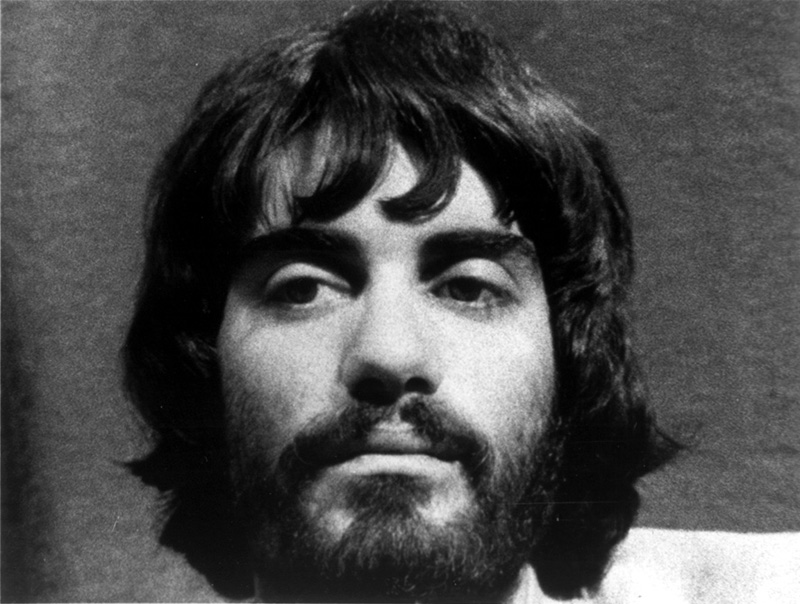
Scott Camil, one of the veterans featured in Winter Soldier
It's a 1972 film called Winter Soldier and it's a documentary about a testimonial event sponsored by the Vietnam Veterans Against the War. In February 1971, shortly after the My Lai massacre was made public, VVAW sponsored a public inquiry into war crimes committed by U.S. forces in Vietnam. The event, called the Winter Soldier Investigation, was held at a Howard Johnson hotel in Detroit and featured more than 120 combat veterans (most of them young men in their late teens and early 20s) describing atrocities they had witnessed and committed during their tours in Vietnam.
The film is captivating. It shows clearly that My Lai was in no way an isolated instance of atrocity but part of a pattern of war crimes committed by American soldiers and marines with the full knowledge of their acquiesent commanders. Listening to the veterans speak, one feels sorry for them having to live through what they did, and it seems that the things they did are natural consequences of men living under the daily stresses of war and have happened over and over again in war since Neolithic times.
I recommend that you all check it out. The film has a lot to say about Vietnam and war generally, and makes you think about what is going on in Iraq and Afghanistan now.
Namaste.
Thursday, March 08, 2007
Rip currents

Standing fast in the current,
I feel it swirling around my ankles,
pulling me under.
The more I try to stand fast,
the stronger the water tugs me down,
irresistable.
Then I see the sandy beach,
and I move gently against the waves,
parallel to shore.
No longer am I struggling,
and the riptide loosens its angry grip,
and I free myself.
______
A theme common to the teachings of my favorite teachers—Pema Chödrön, Thich Nhat Hanh and Lama Surya Das—is that the key to release from suffering and samsara is mindfulness, or what Pema Chödrön calls "learning to stay." It is not a question of no longer having negative feelings or cravings, but rather learning to gently and with lovingkindess understand the feeling or craving without letting it drive us into habitual behaviors of self-harm.
In Florida, there is a common and occasionally lethal ocean phenomenon called a riptide or rip current. A rip current is a strong flow of water returning seaward from the shore, and it can catch swimmers (and especially non-swimmers) unaware and push them farther away from shore. The majority of people who drown in rip currents (causing about 100 fatal drownings in the U.S. each year) do so because they exhaust themselves fighting the current.
One can survive (escape) a rip current in one of two ways: either by floating with the current until it subsides (which works if one is a strong enough swimmer to swim back to shore after being pushed 100 or so feet out) or to move out of the current by swimming parallel to shore. Florida beachgoers are warned that they should not under any circumstances attempt to fight the current, which can be very strong (as fast as 2.5 meters per second).
I think this advice works with cravings and negative feelings, too. Fighting them can create its own difficulties (e.g. guilt). Pema Chödrön teaches that when one feels the tightening, one should gently and without judgment acknowledge the feeling with curiosity, and that in this way one can avoid getting "stuck" or, using my analogy, being carried away by the rip current of one's own angst.
With metta,
D.S.
Tuesday, March 06, 2007
Amazing images of our amazing Earth
I found the most amazing web site that I just must share with you all:
It's called Views of the Earth and it showcases truly gorgeous computer-generated images by a young man from Freiburg, Germany named Christoph Hormann. He has taken two-dimensional satellite images of certain features of our Earth (some well-known, others obscure, but all beautiful) and rendered them into 3D, photo-like perspectives:
It's called Views of the Earth and it showcases truly gorgeous computer-generated images by a young man from Freiburg, Germany named Christoph Hormann. He has taken two-dimensional satellite images of certain features of our Earth (some well-known, others obscure, but all beautiful) and rendered them into 3D, photo-like perspectives:
 Above: The India-Nepal border; Mt. Everest is in the background with the Tibetan Plateau in the upper right
Below: East-central Alaska, featuring Mt. McKinley, Ruth Glacier, Edridge Glacier and the Chulitna River.

Please visit his site and enjoy his wonderful art which reminds us how beautiful, how enduring and yet ever-changing our planet is.
With metta,
D.S.
Tuesday, February 27, 2007
The logic of Christian belief

I was cruising the spiritual Web tonight and found the following on a "Q & A" page about the Bible as the Word of God:
Question 4: Are Christians guilty of circular reasoning?
A: A charge that is frequently leveled against the Bible is that Christians argue in circles. The charge goes that Christians claim the Bible as the inspired Word of God and as proof, quote a passage from the Bible that says so. This type of argumentation is known as begging the question, or circular reasoning. It is based on assuming something to be true, using that assumption as fact to prove another assumption and using the "proved" assumption to prove your original assumption!
Some Christians (and many non-Christians) do argue in circles, but about the Bible they certainly don't need to.
Instead of assuming the Bible is the Word of God, we can begin by demonstrating that the Scriptures are reliable and trustworthy historical documents. This is confirmed by applying the ordinary test of historical criticism to the Scriptures. After establishing that the Bible is a valid historical record, the next point is realizing that Jesus Christ claims to be the unique Son of God and that He bases this claim on His forthcoming resurrection from the dead.
Next, we examine the evidence for the resurrection contained in this historic document and find that the arguments overwhelmingly support the contention that Christ has risen from the dead. If this is true, then He is the unique Son of God as He claimed to be. If He is indeed God, then He speaks with authority on all matters.
Since Jesus considered the Old Testament to be the Word of God (Matthew 15:1-4, 5:17, 18) and promised His disciples, who either wrote or had control over the writing of the New Testament books, that the Holy Spirit would bring all things back to their remembrance (John 14:26), therefore we can insist, with sound and accurate logic, that the Bible is God's Word. This is not circular reasoning. It is establishing certain facts and basing conclusions on the sound, logical outcome of these facts. The case for Christianity can be established by ordinary means of historical investigation.
(From Answers to Tough Questions About the Bible)
It's curious to me that a logical defense of Christian belief would be so illogical. The way I read it, the author above seems to argue that the Bible is a trustworthy source of information because it holds up to historical scrutiny. What kind of historical scrutiny? Well, all the author can say is, "Instead of assuming the Bible is the Word of God, we can begin by demonstrating that the Scriptures are reliable and trustworthy historical documents. This is confirmed by applying the ordinary test of historical criticism to the Scriptures. " Elsewhere on the same website, the author references "one liberal scholar" named John A. T. Robinson and we are told, "The evidence points out that the documents were not written long after the events, but within close proximity to them, and people wrote them during the period when many eyewitnesses or people acquainted with the facts were still living. The inescapable conclusion is that the New Testament picture of Christ can be trusted."
I am not sure how "inescapable" this conclusion really is. If one were talking about any other document—a New York Times news article or a biography of Thomas Jefferson—then it would be reasonable to assess the factual basis of that document by comparing it with other works on the same topic. For example, if the news article contained factual statements that were not present in or contradicted by other news articles on the same topic, one would question the veracity of those statements and seek to independently verify the statements with reference to other reports. However, the authors of the Q & A at www.needhim.org make no attempt to assess the veracity of the Biblical accounts by comparing them to contemporary sources (e.g. the writings of the first century writer Josephus, who wrote about the First Jewish War). Instead, the authors seem to look only to compare the factual statements in the New Testament with one another: "It is important to remember that two statements may differ from each other without being contradictory. Some fail to make a distinction between contradiction and difference."
I respect the fact that Christianity and belief in the message of Jesus have been very helpful and inspirational to many people. However, speaking only for myself, I have always struggled with any belief system—including the Jewish faith of my upbringing—that depends so much on premises which cannot be independently verified or subjected to rigorous analysis. Honestly, one of the things that caused me to turn to Buddhist practice as a way of expressing my spiritual self was the Buddha's famous instruction about belief:
“Believe nothing because a wise man said it.
Believe nothing because it is generally held.
Believe nothing because it is written.
Believe nothing because it is said to be divine.
Believe nothing because someone else believes it.
But believe only what you yourself judge to be true."
Believe nothing because it is generally held.
Believe nothing because it is written.
Believe nothing because it is said to be divine.
Believe nothing because someone else believes it.
But believe only what you yourself judge to be true."
(Kalama Sutra, AN 3.65)
Teachers of Buddhist thought going all the way back to Gothama Siddartha himself encourage their students to think critically about ideas and to subject their assumptions to rigorous analysis. Attachment to one's closely-held beliefs without such questioning is discouraged in Buddhist practice, whereas I think many systems of belief (including most forms of Christianity) encourage practitioners to take a "leap of faith."
Perhaps I am overreacting and taking the whole www.needhim.org thing too seriously.
I don't know.
With metta,
D.S.
Monday, February 26, 2007
Dust in the (Stellar) Wind

Sometimes I think we all get too carried away with ourselves. I know I do! Pema Chödrön calls this "ego-clinging." The concept is that, try as we may to think thoughts of metta and the well-being of others, most of us spend the majority of our waking moments acting as if "it's all about me."
In any case, I was doing a little web-surfing tonight and found some wonderful photographs of nebulae at space.com. Nebulae (plural of nebula), in case you don't know (I didn't!) are interstellar clouds of gas, dust and plasma.
"Nebulae are the birthplace of stars. They are formed when very diffuse molecular clouds begin to collapse under their own gravity, often due to the influence of a nearby supernova explosion. The cloud collapses and fragments, sometimes forming hundreds of new stars. The newly-formed stars ionize the surrounding gas to produce an emission nebula. The nebula's gravity pulls the cloud inward and it starts to spin in the middle eventually gaining enough friction to be hot enough for nuclear fusion to occur.
Other nebulae are formed by the death of stars; a star that undergoes the transition to a white dwarf blows off its outer layer to form a planetary nebula. Novae and supernovae can also create nebulae known as nova remnants and supernova remnants, respectively."
(From Wikipedia)
I close my eyes
Only for a moment and the moment's gone
All my dreams
Pass before my eyes, a curiosity...
Same old song
Just a drop of water in an endless sea
All we do
Crumbles to the ground
Though we refuse to see...
Now don't hang on
Nothin' lasts forever but the earth and sky
It slips away
And all your money won't another minute buy...
So, just remember...
All we are is dust in the (stellar) wind.
Namaste.
Friday, February 23, 2007
Circumcision and sīla

Above: A mother and daughter in an AIDS hospice in Malawi;
the mother transmitted the HIV virus to the daughter in utero
After seeing an article on AIDS and circumcision in the New York Times today, I want to comment on circumcision, which is often criticized, especially in Buddhist circles, as being an unnecessary and painful elective procedure with no medical value.
There is very convincing medical evidence that circumcision reduces the rate of transmission for sexually transmitted diseases, especially HIV/AIDS.
The Buddha taught us to do no harm, and to do what is helpful and beneficial to other beings. The Buddha further taught us that sometimes doing some harm may be necessary in order to prevent a greater harm.
To understand what kind of "greater harm" is at stake, consider the following:
There are more than 38,000,000 cases of HIV/AIDS worldwide, of which more than 24,000,000 (more than 60%) are in Subsaharan Africa. There were approximately 2,500,000 new HIV infections in Africa in 2005 alone, and millions more every year. Almost 30% of the global number of people living with HIV live in southern Africa (Angola, Namibia, Zambia, Zimbabwe, Botswana, Malawi, Mozambique, South Africa, the two small states of Lesotho and Swaziland and the island of Madagascar) where only 2% of the world's population reside.
HIV/AIDS is killing millions of people worldwide, and a recent, double-blind (i.e. scientifically valid) study among African men showed that the rate of HIV transmission was reduced by 65% by circumcision.
In the Upāyakauśalya-sūtra there is a story about the Buddha killing a being in order to save others. While on board a ship, the Buddha discovered that there was a robber who intended to kill all five hundred of his fellow passengers. The Buddha decided to kill the robber, not only for the sake of his fellow passengers but also to save the robber himself from the karmic consequences of his horrendous act. In doing so, the negative karma from killing the robber should have accrued to Shakyamuni but it did not.
Therefore there is a principle in Buddhism that in rare circumstances it may be appropriate to commit an act that harms one being in order to prevent the suffering of others.
I believe that circumcision is justifiable on the basis of this principle. It is true that circumcision is painful and a modification of the body's natural anatomy. But it is also true that, in the case of infant circumcision, the patient will almost certainly have no memory of the procedure (since the brain's long-term memory functions are not fully developed at that point), so the probability of psychological damage to the patient is very, very low. Taking into account the very real possibility that, for males in areas where HIV/AIDS is reaching epidemic proportions, the procedure may very well prevent transmission of HIV/AIDS to their partners, it is far better to cause temporary pain to infants by circumcising them than to condemn millions of others to death and resultant suffering.
Circumcision is therefore in my opinion defensible as a matter of sīla (ethics).
May all beings know peace and freedom from suffering.
Monday, February 12, 2007
Quan Yin's Blessing
I found this on the web - supposedly a blessing of Quan Yin, the bodhisattva of compassion, whose name means "She Who Hears the Cries of the World." That said, I am not sure of its ethnographic or sectarian origin.
To those who withhold refuge,
I cradle you in safety at the core of my Being.
To those that cause a child to cry out,
I grant you the freedom to express your own choked agony.
To those that inflict terror,
I remind you that you shine with the purity of a thousand suns.
To those who would confine, suppress, or deny,
I offer the limitless expanse of the sky.
To those who need to cut, slash, or burn,
I remind you of the invincibility of Spring.
To those who cling and grasp,
I promise more abundance than you could ever hold onto.
To those who vent their rage on small children,
I return to you your deepest innocence.
To those who must frighten into submission,
I hold you in the bosom of your original mother.
To those who cause agony to others,
I give the gift of free flowing tears.
To those that deny another's right to be,
I remind you that the angels sang in celebration of you on the day of your
birth.
To those who see only division and separateness,
I remind you that a part is born only by bisecting a whole.
For those who have forgotten the tender mercy of a mother's embrace,
I send a gentle breeze to caress your brow.
To those who still feel somehow incomplete,
I offer the perfect sanctity of this very moment.
To those who withhold refuge,
I cradle you in safety at the core of my Being.
To those that cause a child to cry out,
I grant you the freedom to express your own choked agony.
To those that inflict terror,
I remind you that you shine with the purity of a thousand suns.
To those who would confine, suppress, or deny,
I offer the limitless expanse of the sky.
To those who need to cut, slash, or burn,
I remind you of the invincibility of Spring.
To those who cling and grasp,
I promise more abundance than you could ever hold onto.
To those who vent their rage on small children,
I return to you your deepest innocence.
To those who must frighten into submission,
I hold you in the bosom of your original mother.
To those who cause agony to others,
I give the gift of free flowing tears.
To those that deny another's right to be,
I remind you that the angels sang in celebration of you on the day of your
birth.
To those who see only division and separateness,
I remind you that a part is born only by bisecting a whole.
For those who have forgotten the tender mercy of a mother's embrace,
I send a gentle breeze to caress your brow.
To those who still feel somehow incomplete,
I offer the perfect sanctity of this very moment.
Thursday, January 11, 2007
Maroon Bells
Maroon Bells (located near Aspen, Colorado), has to be one of my favorite places on earth.
Here's a picture of Maroon Bells at sunset in autumn:

And here's a picture of Maroon Bells in winter:

It's a truly amazing place. The beauty of it, and the amazing scale of the two peaks (each over 14,000 feet), fills me with a sense of humble connectedness with the rest of the universe. I love it. It makes me feel proud to be a Coloradan.
One more picture:

Namaste.
Here's a picture of Maroon Bells at sunset in autumn:

And here's a picture of Maroon Bells in winter:

It's a truly amazing place. The beauty of it, and the amazing scale of the two peaks (each over 14,000 feet), fills me with a sense of humble connectedness with the rest of the universe. I love it. It makes me feel proud to be a Coloradan.
One more picture:

Namaste.
Saturday, January 06, 2007
Impermanence


I took these photos in December 2004 when my husband and I visited the south rim of the Grand Canyon. They do not do justice to the breathtaking scale of the Canyon, but nicely illustrate the principle of impermanence.
Even the earth under our feet is dynamic and ever-changing.
I like the way the band Kansas described it in song:
I close my eyes
Only for a moment and the moment's gone
All my dreams
Pass before my eyes, a curiosity...
Same old song
Just a drop of water in an endless sea
All we do
Crumbles to the ground
Though we refuse to see...
Now don't hang on
Nothin' lasts forever but the earth and sky
It slips away
And all your money won't another minute buy
Dust in the wind
All we are is dust in the wind
Impermanence and its consequences (aging, death, erosion, disintegration, decay, etc.) are inevitable. Our best strategy is to experience the present moment like wind blowing through your hair, accepting it with open-heartedness and curiousity, then letting it go.
Easier said than done, but a good goal.
Shenpa
Below is an excerpt from a teaching by regarding the Tibetan principle of shenpa. If you like it, I encourage you to check out her audiobook called Getting Unstuck. Pema is a wonderful teacher with a down to earth style and a terrific sense of humor.
<> <> <>
Shenpa is the urge, the hook, that triggers our habitual tendency to close down. We get hooked in that moment of tightening when we reach for relief. To get unhooked we begin by recognizing that moment of unease and learn to relax in that moment.
You're trying to make a point with a coworker or your partner. At one moment her face is open and she's listening, and at the next, her eyes cloud over or her jaw tenses. What is it that you're seeing?
Someone criticizes you. They criticize your work or your appearance or your child. At moments like that, what is it you feel? It has a familiar taste in your mouth, it has a familiar smell. Once you begin to notice it, you feel like this experience has been happening forever.
The Tibetan word for this is shenpa. It is usually translated "attachment," but a more descriptive translation might be "hooked." When shenpa hooks us, we're likely to get stuck. We could call shenpa "that sticky feeling." It's an everyday experience. Even a spot on your new sweater can take you there. At the subtlest level, we feel a tightening, a tensing, a sense of closing down. Then we feel a sense of withdrawing, not wanting to be where we are. That's the hooked quality. That tight feeling has the power to hook us into self-denigration, blame, anger, jealousy and other emotions which lead to words and actions that end up poisoning us. Remember the fairy tale in which toads hop out of the princess's mouth whenever she starts to say mean words? That's how being hooked can feel. Yet we don't stop—we can't stop—because we're in the habit of associating whatever we're doing with relief from our own discomfort. This is the shenpa syndrome. The word "attachment" doesn't quite translate what's happening. It's a quality of experience that's not easy to describe but which everyone knows well. Shenpa is usually involuntary and it gets right to the root of why we suffer...
"Shenpa thrives on the underlying insecurity of living in a world that is always changing. We experience this insecurity as a background of slight unease or restlessness. We all want some kind of relief from that unease, so we turn to what we enjoy—food, alcohol, drugs, sex, work or shopping. In moderation what we enjoy might be very delightful. We can appreciate its taste and its presence in our life. But when we empower it with the idea that it will bring us comfort, that it will remove our unease, we get hooked. So we could also call shenpa "the urge"—the urge to smoke that cigarette, to overeat, to have another drink, to indulge our addiction whatever it is. Sometimes shenpa is so strong that we're willing to die getting this short-term symptomatic relief. The momentum behind the urge is so strong that we never pull out of the habitual pattern of turning to poison for comfort. It doesn't necessarily have to involve a substance; it can be saying mean things, or approaching everything with a critical mind. That's a major hook. Something triggers an old pattern we'd rather not feel, and we tighten up and hook into criticizing or complaining. It gives us a puffed-up satisfaction and a feeling of control that provides short-term relief from uneasiness...
"Those of us with strong addictions know that working with habitual patterns begins with the willingness to fully acknowledge our urge, and then the willingness not to act on it. This business of not acting out is called refraining. Traditionally it's called renunciation. What we renounce or refrain from isn't food, sex, work or relationships per se. We renounce and refrain from the shenpa. When we talk about refraining from the shenpa, we're not talking about trying to cast it out; we're talking about trying to see the shenpa clearly and experiencing it. If we can see shenpa just as we're starting to close down, when we feel the tightening, there's the possibility of catching the urge to do the habitual thing, and not doing it. Without meditation practice, this is almost impossible to do...
"The Tibetan word for renunciation is shenlok, which means turning shenpa upside-down, shaking it up. When we feel the tightening, somehow we have to know how to open up the space without getting hooked into our habitual pattern. In practicing with shenpa, first we try to recognize it. The best place to do this is on the meditation cushion.
Sitting practice teaches us how to open and relax to whatever arises, without picking and choosing. It teaches us to experience the uneasiness and the urge fully, and to interrupt the momentum that usually follows. We do this by not following after the thoughts and learning to come back to the present moment. We learn to stay with the uneasiness, the tightening, the itch of shenpa. We train in sitting still with our desire to scratch. This is how we learn to stop the chain reaction of habitual patterns that otherwise will rule our lives. This is how we weaken the patterns that keep us hooked into discomfort that we mistake as comfort. We label the spinoff "thinking" and return to the present moment.
Once we're aware of shenpa, we begin to notice it in other people. We see them shutting down. We see that they've been hooked and that nothing is going to get through to them now. At that moment we have prajna. That basic intelligence comes through when we're not caught up in escaping from our own unease. With prajna we can see what's happening with others; we can see when they've been hooked. Then we can give the situation some space. One way to do that is by opening up the space on the spot, through meditation. Be quiet and place your mind on your breath. Hold your mind in place with great openness and curiosity toward the other person. Asking a question is another way of creating space around that sticky feeling. So is postponing your discussion to another time...
"We could think of this whole process in terms of four R - s: recognizing the shenpa, refraining from scratching, relaxing into the underlying urge to scratch and then resolving to continue to interrupt our habitual patterns like this for the rest of our lives. What do you do when you don't do the habitual thing? You're left with your urge. That's how you become more in touch with the craving and the wanting to move away. You learn to relax with it. Then you resolve to keep practicing this way. Working with shenpa softens us up. Once we see how we get hooked and how we get swept along by the momentum, there's no way to be arrogant.
The trick is to keep seeing. Don't let the softening and humility turn into self-denigration. That's just another hook. Because we've been strengthening the whole habituated situation for a long, long time, we can't expect to undo it overnight. It's not a one-shot deal. It takes loving-kindness to recognize; it takes practice to refrain; it takes willingness to relax; it takes determination to keep training this way. It helps to remember that we may experience two billion kinds of itches and seven quadrillion types of scratching, but there is really only one root shenpa—ego-clinging. We experience it as tightening and self-absorption. It has degrees of intensity. The branch shenpas are all our different styles of scratching that itch.
I recently saw a cartoon of three fish swimming around a hook. One fish is saying to the other, "The secret is non-attachment." That's a shenpa cartoon: the secret is—don't bite that hook. If we can catch ourselves at that place where the urge to bite is strong, we can at least get a bigger perspective on what's happening. As we practice this way, we gain confidence in our own wisdom. It begins to guide us toward the fundamental aspect of our being—spaciousness, warmth and spontaneity.
Subscribe to:
Posts (Atom)